Maximizing Vocational Storage: Commercial Van Upfitting Tips


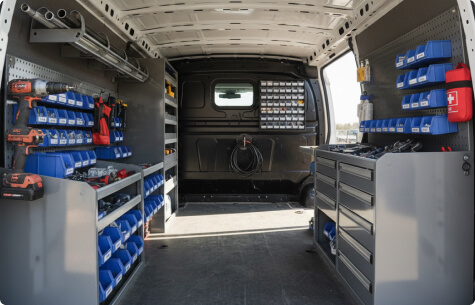
A work van is a rolling stockroom. When it is laid out well, a tech walks to the side door, grabs the fitting or breaker they need and gets back to the job. When it is laid out poorly, they spend the first ten minutes of every call digging through loose boxes on the floor.
Good vocational storage is not about cramming in as much shelving as possible. It is about building the van around how your crew actually works. Here is how to plan it.
The short answer
Start van upfitting with a list of everything the van carries. Group items by type, then lay out zones with the most-used parts near the side door. Keep heavy items low and centered. Add a partition and a ladder rack, and keep the total weight under the van's payload.
Secure storage is a safety issue, too. A AAA Foundation for Traffic Safety study counted more than 319,000 road-debris crashes from 2018 to 2023. Unsecured cargo was one of the most common types of debris. Partitions, racks and tie-downs keep tools and ladders where they belong.
Start with an inventory of what rides in the van
Before you choose a single shelf, list everything the van carries on a normal day. Sort it into groups:
- Small parts: fittings, fasteners, connectors, fuses.
- Hand and power tools: drills, saws, meters, cases.
- Long stock: pipe, conduit, lumber, ladders.
- Bulky items: pumps, coils, water heaters, rolls of wire or line.
- Hazardous or messy items: refrigerant, fuel cans, chemicals.
Each group calls for a different kind of storage. Small parts want bins and drawers. Long stock wants a roof rack or an interior conduit tube. Bulky items need open floor space with tie-downs.
Think in zones
Lay out the van in zones based on how often things are used. The most-used items go closest to the side door at waist-to-chest height. Less-used items go higher, lower or further forward. Heavy items should sit low and as close to the center of the van as practical to help handling.
A common layout puts shelving and drawer units on the curb side, reachable from the sliding door. The driver side holds taller shelving or open floor space for bulky gear. Your trade may call for something different, and that is fine. The point is to make it intentional.
Shelving, drawers and bins
Commercial shelving systems are designed for vans, with profiles that follow the curve of the van wall and mount to factory points. Brands like Adrian Steel and Ranger Design build shelving, drawer units, bin systems and accessories for most popular cargo vans.
- Adjustable shelves let you change the layout as your work changes.
- Lipped shelves or door kits keep items from sliding off during hard stops.
- Removable parts bins and cases can be carried to the work area, saving trips back to the van.
- Drawer units keep small tools and meters protected and organized.
Watch your payload
Steel shelving is strong but heavy, and every pound of upfit is a pound you cannot carry in parts. Check your van's GVWR and payload in the owner's manual. Add the weight of the upfit, the crew and a full load of inventory. Stay under the limit. Some manufacturers offer lighter-weight shelving materials; ask about the trade-offs.
Partitions and safety
A bulkhead partition between the cab and the cargo area keeps loose items from moving into the cab during a sudden stop. Partitions can also help climate control in the cab and reduce noise. Options range from solid steel to mesh and include designs with cutouts that allow the driver seat to recline.
Ladder racks and long-item storage
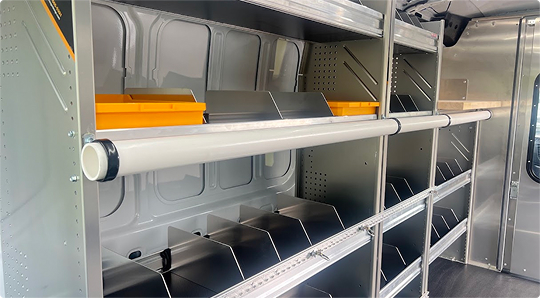
Do your techs carry ladders every day? A drop-down ladder rack makes loading safer. It brings the ladder down to a reachable height, so nobody has to climb. Fixed racks cost less and work well for occasional use. Interior or roof-mounted conduit tubes keep pipe and conduit dry and protected.
Keep in mind that roof racks add height. Check clearance for your shop door, parking garages and drive-throughs.
Power and lighting
Many vocational vans benefit from interior LED lighting in the cargo area and, for some trades, an inverter or auxiliary power setup. Bright interior light helps techs find parts at early-morning and evening calls. Any electrical work should be planned around your van's electrical system and done by someone who knows it.
Plan for your whole fleet
If you run several vans, standardizing the layout pays off. When every van is set up the same way, any tech can jump in any truck and know where everything is. Restocking gets easier, and you can build a consistent inventory list per van.
Commercial van upfitting in Knoxville
Commercial upfitting is a core part of what we do. We carry Adrian Steel and Ranger Design van equipment, plus Reading and CM truck bodies. Bring your list of what rides in your van, and see our fleet upfitting checklist. Our showroom and install shop is at 5915 Casey Drive in Knoxville, right off I-40 at Exit 383. We are open Monday to Friday, 8:30 AM to 5:30 PM. Call 865-670-4060 or request a quote. Coming from out of town? Call ahead so we can confirm parts and book your install.
Frequently asked questions
What is the best shelving layout for a work van?
There is no single best layout. Put your most-used items near the side door at waist-to-chest height, keep heavy items low and centered, and organize around your trade's daily workflow.
Does van shelving affect payload?
Yes. Shelving, drawers, partitions and racks all add weight that counts against payload. Check your van's GVWR and payload in the owner's manual and plan the upfit with a full inventory load in mind.
Do I need a partition in my cargo van?
A partition is strongly recommended for vans carrying tools and parts, because it helps keep cargo out of the cab during sudden stops. It can also help with cab comfort and noise.