Choosing LED Light Bars and Auxiliary Lighting for Your Truck


Good lighting changes how a truck works after dark. Whether you are on a back road at night, setting up a campsite, loading equipment before sunrise or working a trail, LED light bars and auxiliary lights can make a big difference. But more light is not always better light. The right beam pattern, placement and wiring matter as much as raw output.
Here is how to choose.
Understand beam patterns
The beam pattern decides where the light goes. The main types are:
- Spot: a narrow, focused beam that reaches far ahead. Good for seeing distance at speed off-road.
- Flood: a wide beam that spreads light close to the truck. Good for work areas, campsites and slow trail driving.
- Combo: a mix of spot and flood optics in one light bar for both reach and spread.
- Driving: a pattern between spot and flood, designed to supplement headlights with a balanced beam.
Most owners pick a combo bar for general use and add flood pods for close-in work.
Pick the right type of light
Light bars
Light bars come in single-row and dual-row designs and many lengths. Longer and dual-row bars generally put out more light, but they draw more power and are harder to fit cleanly.
Pods and cubes
Small LED pods are versatile. Mount them as ditch lights at the A-pillars, on a bumper, or as reverse lights for backing up a trailer at night.
Work lights and rock lights
Work lights on a rack or bed rail help with loading. Rock lights under the truck light up the ground around the tires on technical trails.
Choose a mounting location
- Roof: maximum reach, but can cause glare off the hood, wind noise and a hit to fuel economy.
- Bumper or grille: lower, less glare and less wind noise, though the beam reaches a bit less far.
- A-pillar ditch lights: light up the sides of a trail or road edge.
- Rear and bed: reverse and work lighting for loading and hitching.
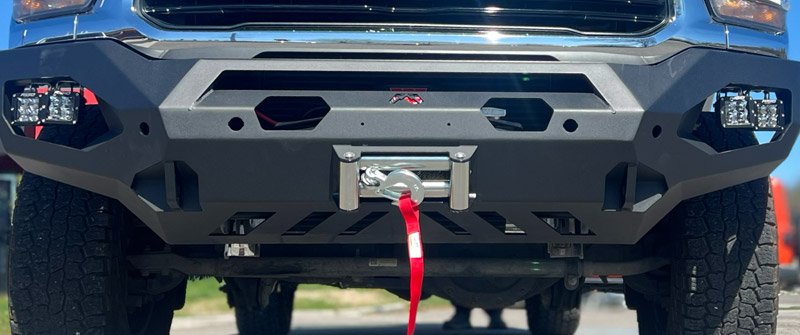
Aftermarket steel bumpers, like those from ADD Offroad, often include built-in light mounts that make for a clean install.
Look at build quality
Not all LED lights are equal. Look for:
- Waterproof and dustproof ratings, often shown as an IP rating such as IP67 or IP68.
- Quality housings with good heat management, because LEDs lose output and lifespan when they run hot.
- Durable lenses that resist cracking and yellowing.
- Solid mounting hardware that will not rattle loose on rough roads.
Advertised lumen numbers can be inconsistent between brands, so focus on real-world reviews and beam pattern, not just the biggest number on the box.
Wire it right
Wiring is where many lighting installs go wrong. A proper install should include:
- A relay so the switch is not carrying the full load.
- A correctly sized fuse close to the battery.
- Weatherproof connectors and properly sized wire.
- Wire routed away from heat and moving parts and secured along the way.
- A switch mounted where you can reach it easily, ideally with a clean, factory-style look.
Modern trucks have complex electronics, so it pays to have lighting wired by someone who knows your vehicle.
Know the rules before you light up the road
Laws on auxiliary lighting vary by state, and they cover things like how many forward lights can be on, colors, mounting height and whether lights must be covered on public roads. Check current Tennessee law, and the law of any state you drive through, before using auxiliary lights on public roads. As a rule of thumb, treat high-output light bars as off-road lights and use them off-road only where required. Never run them toward oncoming traffic, which can blind other drivers.
Some owners wire lights so they only work with high beams, or use covers on light bars when on pavement. Ask your installer about options that fit how you drive.
Lighting packages in Knoxville
LED light bars and auxiliary lighting are part of the accessories lineup at Phoenix Conversions. We can help you choose beam patterns and mounting spots that fit your truck, and pair lighting with bumpers and grilles. Visit our showroom at 5915 Casey Drive in Knoxville, just off I-40 at Exit 383, or call 865-670-4060 to request a quote.
Frequently asked questions
What is the difference between spot and flood LED lights?
Spot beams are narrow and reach far ahead. Flood beams spread light wide and close to the truck. Combo bars mix both for general use.
Can I use an LED light bar on the road in Tennessee?
Auxiliary lighting rules vary by state. Check current Tennessee law, and use high-output light bars off-road only where required. Never aim them at oncoming traffic.
Do LED light bars need a relay?
Most larger lights should be wired with a relay and a proper fuse so the switch does not carry the full electrical load. A wiring harness designed for the light often includes both.